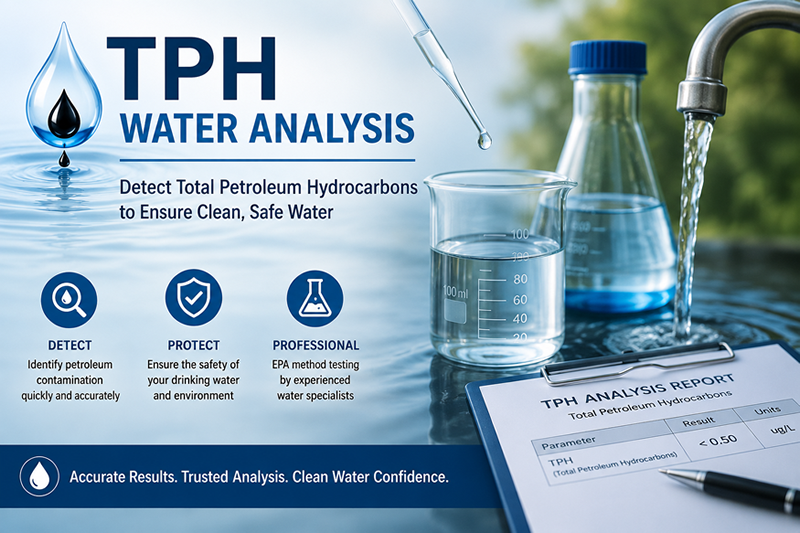
If you need TPH water analysis in CT, professional laboratory testing can determine whether Total Petroleum Hydrocarbons (TPH) are present in your drinking water. TPH is a broad term used to describe a large group of petroleum-based compounds that originate from crude oil, gasoline, diesel fuel, heating oil, lubricating oils, jet fuel and other petroleum products. A professional Total Petroleum Hydrocarbon Water Analysis in Connecticut can help property owners identify potential petroleum contamination and evaluate the quality of their water supply.
Because petroleum-related contamination can originate from both current and historical sources, many Connecticut property owners choose to perform a TPH water analysis when purchasing a property, evaluating a private well, investigating fuel spills or monitoring environmental conditions near storage tanks and fuel-handling facilities.
What Are Total Petroleum Hydrocarbons (TPH)?
Total Petroleum Hydrocarbons are not a single chemical. Instead, TPH represents a broad group of compounds found in petroleum products. These compounds may enter groundwater and drinking water when petroleum products are released into the environment through leaks, spills, equipment failures or improper storage practices.
A Total Petroleum Hydrocarbon Water Analysis evaluates water for the presence of petroleum-related contamination that may indicate an impact from fuel products. Because petroleum products contain many different compounds, TPH testing is often used as a screening tool to determine whether petroleum contamination may be present.
A professional TPH water analysis in Connecticut may be recommended whenever petroleum contamination is suspected or when a property has a history of fuel storage or petroleum-related activities.
Common Sources of Petroleum Contamination in Connecticut
Petroleum contamination can occur in both residential and commercial settings. Connecticut properties that currently have or previously had fuel storage systems may sometimes benefit from a Total Petroleum Hydrocarbon Water Analysis in CT.
Potential sources of TPH contamination include:
- Leaking underground storage tanks
- Leaking above-ground storage tanks
- Home heating oil tanks
- Gasoline storage systems
- Diesel fuel storage facilities
- Fuel delivery accidents and spills
- Commercial fueling operations
- Vehicle maintenance facilities
- Industrial petroleum handling activities
- Historical contamination from former property uses
- Groundwater migration from nearby contamination sources
- Pipeline leaks and petroleum transportation incidents
In some situations, petroleum contamination may be obvious due to odors, staining or known spill events. In other cases, contamination may not be readily apparent without professional laboratory testing. A TPH water analysis provides objective laboratory data regarding potential petroleum impacts.
Signs That May Indicate the Need for a TPH Water Analysis
While laboratory testing is necessary to confirm contamination, certain conditions may indicate that a Total Petroleum Hydrocarbon Water Analysis should be considered.
- Fuel, gasoline, diesel or oil odors in water
- Known fuel spills on or near the property
- Current or former underground storage tanks
- Current or former heating oil tanks
- Visible petroleum sheen in standing water
- Properties located near fueling facilities
- Industrial or commercial petroleum activities nearby
- Environmental concerns identified during a real estate transaction
Not all petroleum contamination produces noticeable odors or visible signs. As a result, many Connecticut property owners choose to perform a TPH water analysis in CT whenever a potential petroleum source exists, even if no obvious symptoms are present.
Why TPH Water Analysis Is Important
A professional Total Petroleum Hydrocarbon Water Analysis in Connecticut provides valuable information regarding the presence of petroleum-related contamination in drinking water. Testing is often recommended for private wells, real estate transactions, environmental investigations and properties located near actual or suspected petroleum release sites.
TPH testing may be beneficial for:
- Private well owners
- Home buyers and sellers
- Commercial property owners
- Industrial facilities
- Environmental site assessments
- Properties with current or former fuel tanks
- Properties near petroleum storage facilities
- Routine groundwater monitoring programs
Because TPH represents a broad category of petroleum compounds, additional testing may sometimes be recommended depending upon the source of contamination and the purpose of the investigation. Laboratory results can help determine whether further evaluation may be appropriate.
We provide professional TPH water analysis in Connecticut and Total Petroleum Hydrocarbon Water Analysis in CT for homeowners, businesses, environmental professionals, real estate transactions and private well owners throughout Connecticut. Whether you are investigating a known fuel spill, evaluating a property with underground storage tanks or monitoring groundwater quality, professional water analysis in Connecticut can provide accurate laboratory results and valuable information regarding petroleum contamination in your water supply.
Call today to schedule a water analysis for Total Petroleum Hydrocarbon in your Connecticut drinking water!
888-558-1574