If you need water analysis for radon in CT, professional laboratory testing can determine whether radon is present in your drinking water and help evaluate potential exposure concerns. Radon is a naturally occurring radioactive gas formed by the breakdown of uranium in rock and soil. Throughout Connecticut, radon can enter groundwater supplies and may be found in private wells and other drinking water sources.
Because radon is colorless, odorless and tasteless, property owners generally cannot detect its presence without a professional water analysis in Connecticut. Laboratory testing is the only reliable way to determine whether radon is present in water and at what concentration.
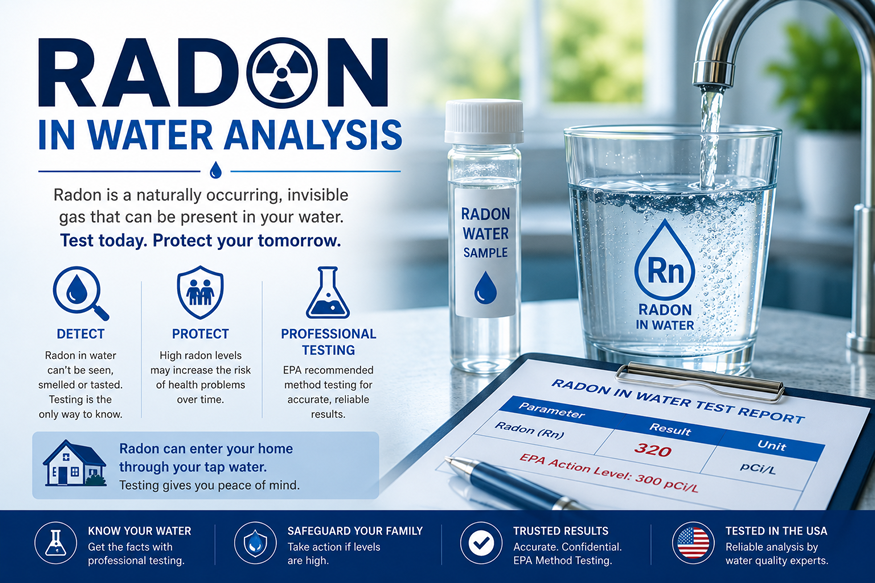
How Radon Gets Into Drinking Water
Radon forms naturally underground as uranium breaks down within rock and soil formations. As groundwater moves through these formations, radon gas can dissolve into the water supply. When that groundwater is used by a private well, radon may be carried directly into the home.
A water analysis for radon in Connecticut is most commonly performed for private wells because groundwater typically has greater potential for radon contamination than surface water sources. Public water systems generally experience lower radon levels because treatment, storage and distribution often allow radon gas to dissipate before reaching consumers.
Radon concentrations can vary significantly from one property to another depending upon local geology, groundwater conditions and the characteristics of the water supply. For this reason, neighboring properties may have substantially different radon levels even when located within the same community.
Why Water Analysis for Radon Is Important
Many people assume that the primary concern associated with radon in water is drinking it. While ingestion may contribute to overall exposure, the greater concern is typically what happens when water containing radon is used inside the home.
When radon-containing water is used for showering, bathing, washing dishes, laundry and other household activities, radon gas can be released from the water into the indoor air. Once released, the gas may be inhaled by occupants.
For this reason, most exposure associated with radon in water generally comes from breathing radon released into the air rather than from actually drinking the water itself. Activities that create mist, steam, spray or aeration can increase the release of radon gas from water into indoor living spaces.
A professional water analysis for radon in CT can help determine whether a drinking water supply may be contributing to indoor radon levels and whether additional evaluation may be appropriate.
Common Sources and Conditions Associated With Radon in Connecticut
Connecticut contains geological formations that may naturally contain uranium-bearing rock. As uranium breaks down over time, radon gas is produced and may migrate into groundwater supplies.
Factors that may influence radon levels include:
- Local bedrock geology
- Naturally occurring uranium deposits
- Groundwater movement through rock formations
- Private well construction and depth
- Regional geological conditions
- Natural radioactive decay processes underground
Because radon originates naturally, its presence is not necessarily related to nearby industrial activity, agricultural practices or surface contamination. Instead, radon is most often associated with the natural characteristics of the underlying geology.
A professional water analysis in CT can help determine whether radon is present in a private well and provide valuable information regarding potential exposure concerns.
Many Connecticut homeowners choose to include radon testing as part of a comprehensive water analysis when purchasing a home, evaluating a private well or investigating indoor air quality concerns. Since radon can originate from both soil gas and groundwater, water testing may be an important component of a broader evaluation.
If elevated radon concentrations are identified through laboratory testing, treatment options may be available depending upon the water source and the concentration detected. The most appropriate corrective approach depends upon the specific conditions of the property and the results of the water analysis.
We provide professional water analysis for radon in Connecticut for homeowners, home buyers, businesses and private well owners throughout CT. Whether you are purchasing a property, evaluating a private well or monitoring drinking water quality, professional water analysis in Connecticut can provide accurate laboratory results and valuable information regarding radon in your water supply.
Call today to schedule a water analysis for radon in your Connecticut drinking water!
888-558-1574